Collective Blacklist
Brand managers often encounter bloggers who accept products but fail to deliver the promised posts. This behavior can be frustrating, especially when it happens repeatedly across different brands with little consequence. To address this issue, we’ve introduced the Collective Blacklist feature. This tool helps brands protect their products and ensures that bloggers uphold their commitments.
How Collective Blacklisting Works
Managers cannot blacklist bloggers arbitrarily. The system only allows blacklisting in two specific scenarios for non-VIP bloggers:
- when a blogger misses a deadline and is suspended by the system;
- when a blogger intentionally leaves the brand.
If either of these situations occurs, and the blogger’s Blogged Products Ratio falls below the safety threshold of 50%, the manager will have the option to blacklist the blogger. This threshold is designed to identify bloggers who have taken significantly more products than they have blogged.
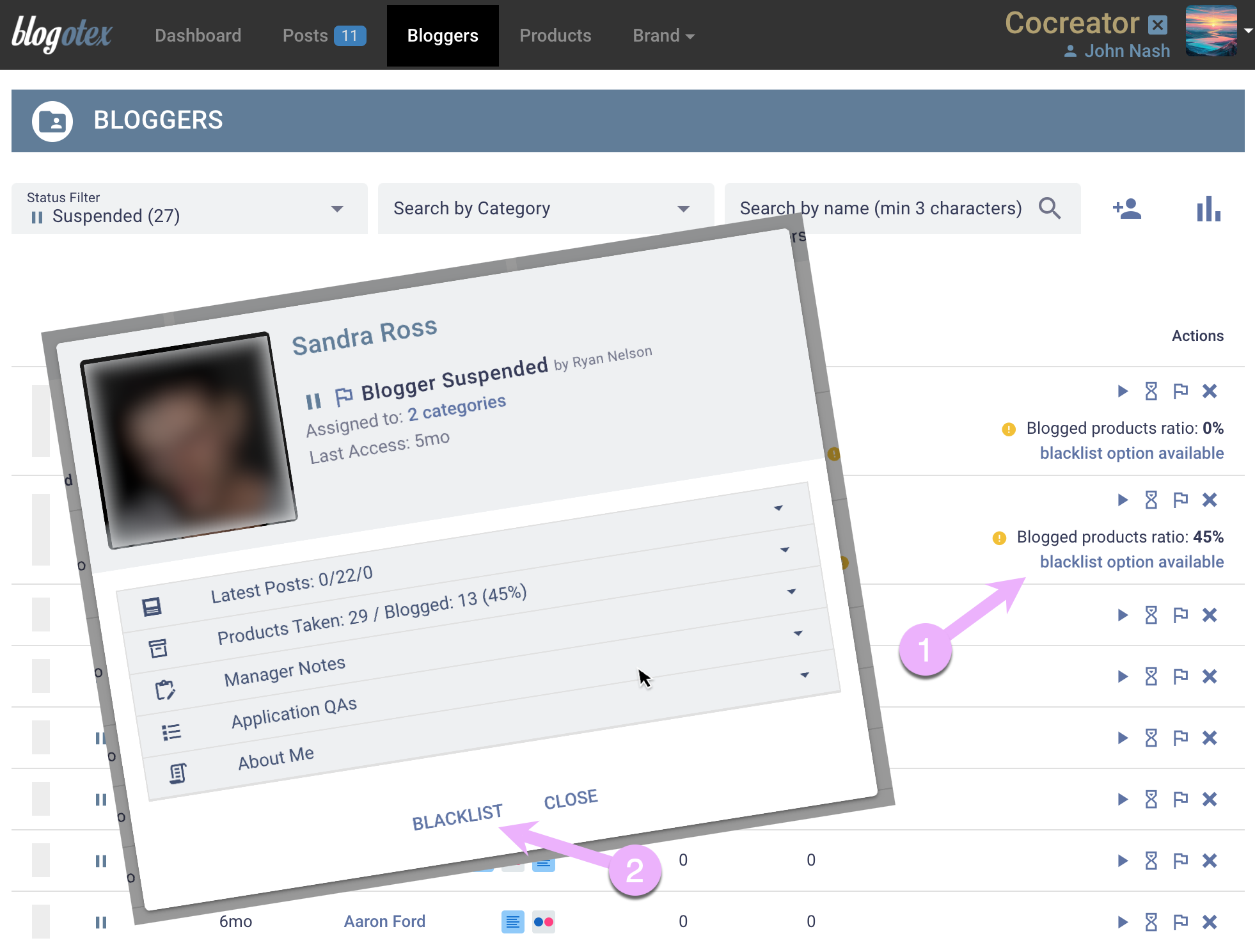
Blogged Products Ratio
The ratio is a critical metric used to determine a blogger’s eligibility for blacklisting. It is calculated using the following formula:
R = (blogged / taken) * 100
Where:
- blogged : number of products blogged (a blogpost featuring the product must be successfully accepted; multiple posts for the same product still count as 1).
- taken : number of products taken (demos are excluded).
For example, if a blogger takes three products (A, B, and C) and blogs only product A (doesn't matter how many times), the ratio would be 1 / 3 * 100 = 33%. Since this number falls below the 50% safety threshold, the system will offer the blacklisting option.
As of September 1st, 2021, the system differentiates between VIP and non-VIP bloggers at the time of product acquisition. Products taken while a blogger is VIP do not count towards the ratio. However, any products taken before this date, regardless of VIP status, are treated as regular products.
Manager’s Discretion
Before blacklisting, managers are encouraged to evaluate each case individually. The presence of an active blacklisting option doesn’t mean immediate action is required. It’s a signal to investigate further. We recommend contacting the blogger to discuss the situation and seek a resolution. If a manager decides to proceed with blacklisting, they must confirm the action.
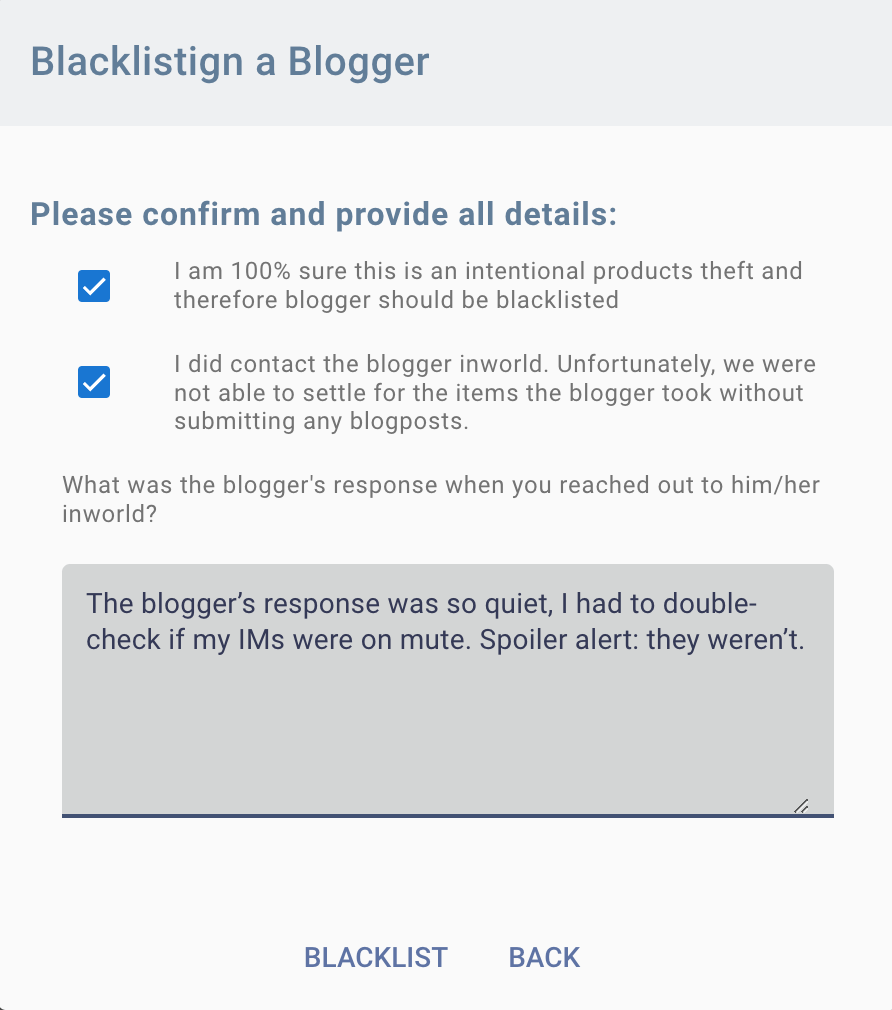
The Power of Collective Blacklisting
When a blogger is blacklisted, they are permanently barred from rejoining the brand that blacklisted them. However, the
impact extends further. Each brand has the option to decide whether they want to accept applications from bloggers who
are already blacklisted by other brands. For instance, a manager can set a threshold—if a blogger is blacklisted by
three other brands, they won’t be able to apply. This threshold, which defaults to “Off,” can be adjusted under
Brand->Settings.
To maintain privacy, managers will only see the names of bloggers they have personally blacklisted. Bloggers blacklisted by other brands under the set threshold will remain anonymous.
How Bloggers Are Notified
Bloggers are informed of their blacklisted status in two ways:
- If a specific brand blacklists them, they’ll see this information under “Your Brands List” with a filter set to “Blacklisted.”;
- If they attempt to apply to a brand but are blocked due to the collective blacklist threshold, this will be indicated instead of the usual application form. In this case, the only way to join the brand is through a direct invitation from the brand owner.
In both situations, bloggers are encouraged to reach out to the brand managers to resolve the issue and potentially be removed from the blacklist.
Handling Cases Where Collective Blacklisting Isn’t Allowed
If you want to blacklist a blogger but the situation doesn’t meet the criteria for Collective Blacklisting, you can use the rejected list to manage their access. Keeping a blogger in the rejected list effectively prevents them from reapplying, serving as a practical alternative to blacklisting within your brand.
Collective Blacklisting has far-reaching effects across the entire platform, so it’s reserved for cases that meet strict, objective criteria. This ensures that the tool is used fairly and responsibly, maintaining trust in the system.
Final Thoughts
The Collective Blacklist feature has matured into a robust tool designed to encourage responsible behavior among bloggers. It empowers brands and events to protect their interests by collaborating within the Blogotex platform. By using this feature, brands can ensure a more reliable and trustworthy environment for all participants, fostering better partnerships and a more accountable community.